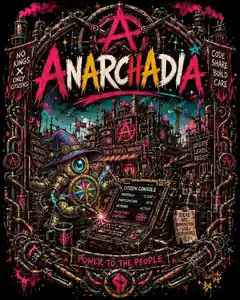
A social operating system told as a fantasy world

Weave a world worth living in.

Civweave turns a wish into a Quest through learning, useful work, fair exchange, and civic action. You enter as a Hero. You can travel alone, but the world is built to help you find a Party, join a Guild, and make difficult things possible together.

Civweave woven-heart portal mark
State your intention.A Weaveling shapes it into a Quest and helps you find the doors, Heroes, and Party that can move it forward.
commits woven into Civweave
first thread committed
livepublic source history

The story

Anarchadia was torn. So someone built doors.

The world of Civweave begins in Anarchadia, a land whose magic once lived in ordinary cooperation. Then an anti-magic fascist uprising taught people to distrust one another, surrender their agency, and wait for a dark warlock emperor to promise that someone else would make life meaningful again.

The frantic invention

In the story, Civweave is assembled as a box of enchanted manifestation tools. Not a single spell, but a kit: a school for turning curiosity into competence, a workshop for turning competence into useful work, a market for moving resources where they matter, and a civic foundry for deciding what happens next.

The point is not to defeat darkness by becoming better at punishment. The point is to make abandonment less profitable. Give people practical routes to learn, contribute, trade, belong, and shape their surroundings, and the spell that says “nothing can get better” has less room to take hold.

What the fantasy means

The political language above belongs to Civweave's fictional story-world. In plain English, Civweave is software for reducing social isolation and coordination friction. It helps people turn goals into structured plans, find nearby knowledge and resources, document work, exchange value, and participate in transparent community governance.

The villain is not a real person or party. The “darkness” is the mix of alienation, learned helplessness, scarcity, and broken trust that can make authoritarian promises feel like the only available source of order.

Heroes do not have to quest alone

In Civweave's world, a person using the system is a Hero. An intention plan becomes a Quest. Heroes can form a lightweight Party around a Quest, while Guilds keep Civweave reachable and give local communities a dependable home.

Solo play remains a first-class path. The system simply assumes that many meaningful goals become easier, richer, and more resilient when Heroes can discover one another and choose to work together.

Guildkeepers keep the Guild alive

A Guild is a Civweave community host. Its Guildkeeper keeps the local hearth available, publishes honest capacity, maintains recovery paths, and welcomes Heroes who need a place to belong.

A territory may also name a Charterkeeper: a trusted continuity role that can help establish and authorize new Guilds, coordinate regional recovery, and keep federation healthy. Charterkeepers do not govern the Guilds they help charter, and Guildkeepers do not become rulers simply because they run infrastructure.

Weaveling

Fate weaver · Civweave Commons

A cloud-connected species of intention guides. A Weaveling listens to a wish, helps clarify it, shapes it into a Quest, and opens portals into the tools and people most likely to move it forward.

Moss

Learning guide · Living School

Moss grows a learning path around what you actually want to do, with practice, evidence, feedback, and skills that can cross into real work.

Kamiya

Fox engineer · Cerbanimo

Kamiya turns intention into Quests, plans, deliverables, and credit. She helps Heroes break the work apart, form a Party when collaboration helps, and make the next piece real.

Rook

Quartermaster · FellowFare

Rook keeps exchange legible: needs, offers, goods, services, prices, gifts, and the practical question of how resources reach the right hands.

Merlin

Wizard-droid · Anarchadia civic heart

Merlin helps communities propose, deliberate, validate, audit, and automate their own rules without turning a Guildkeeper into a king.

The antagonist

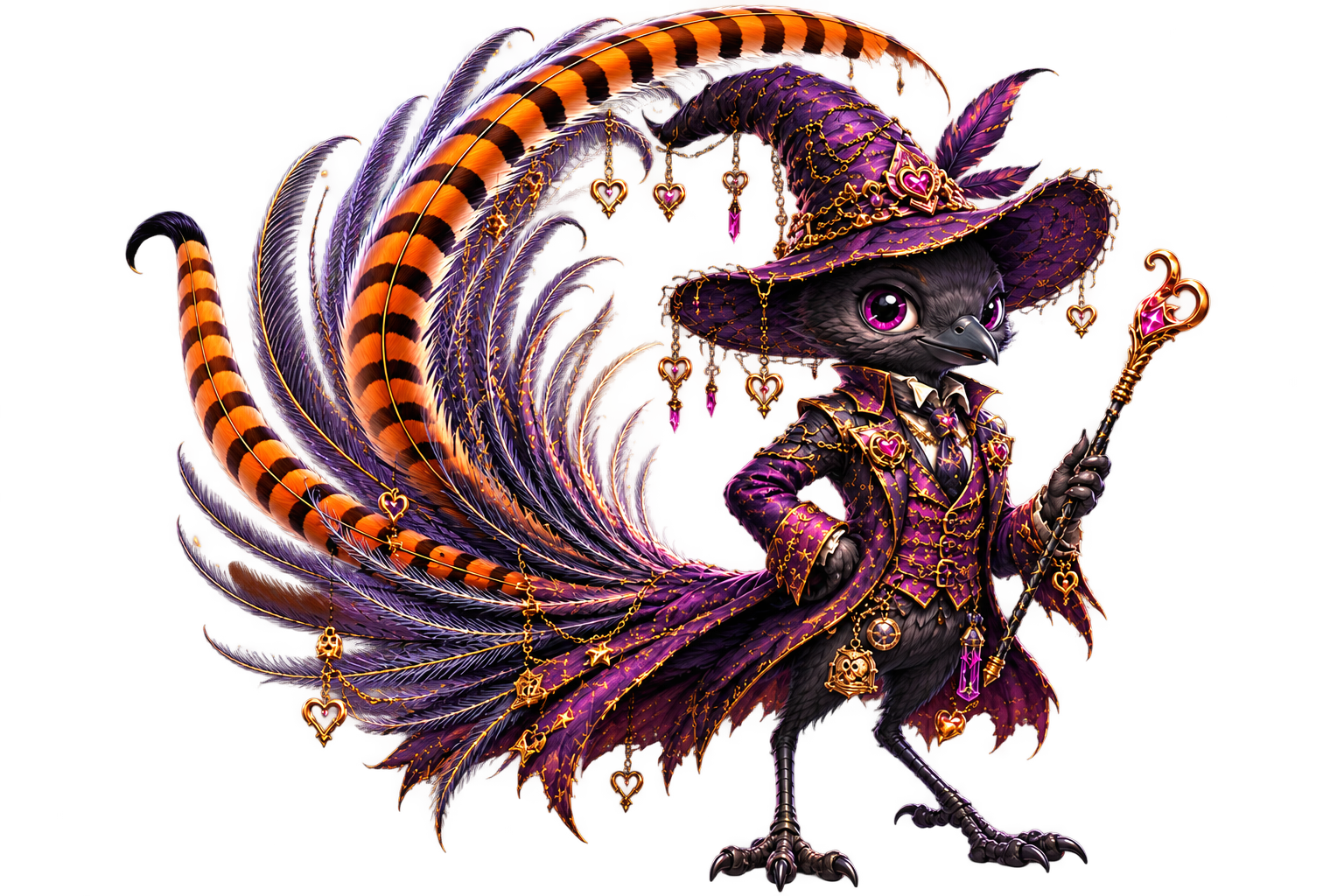
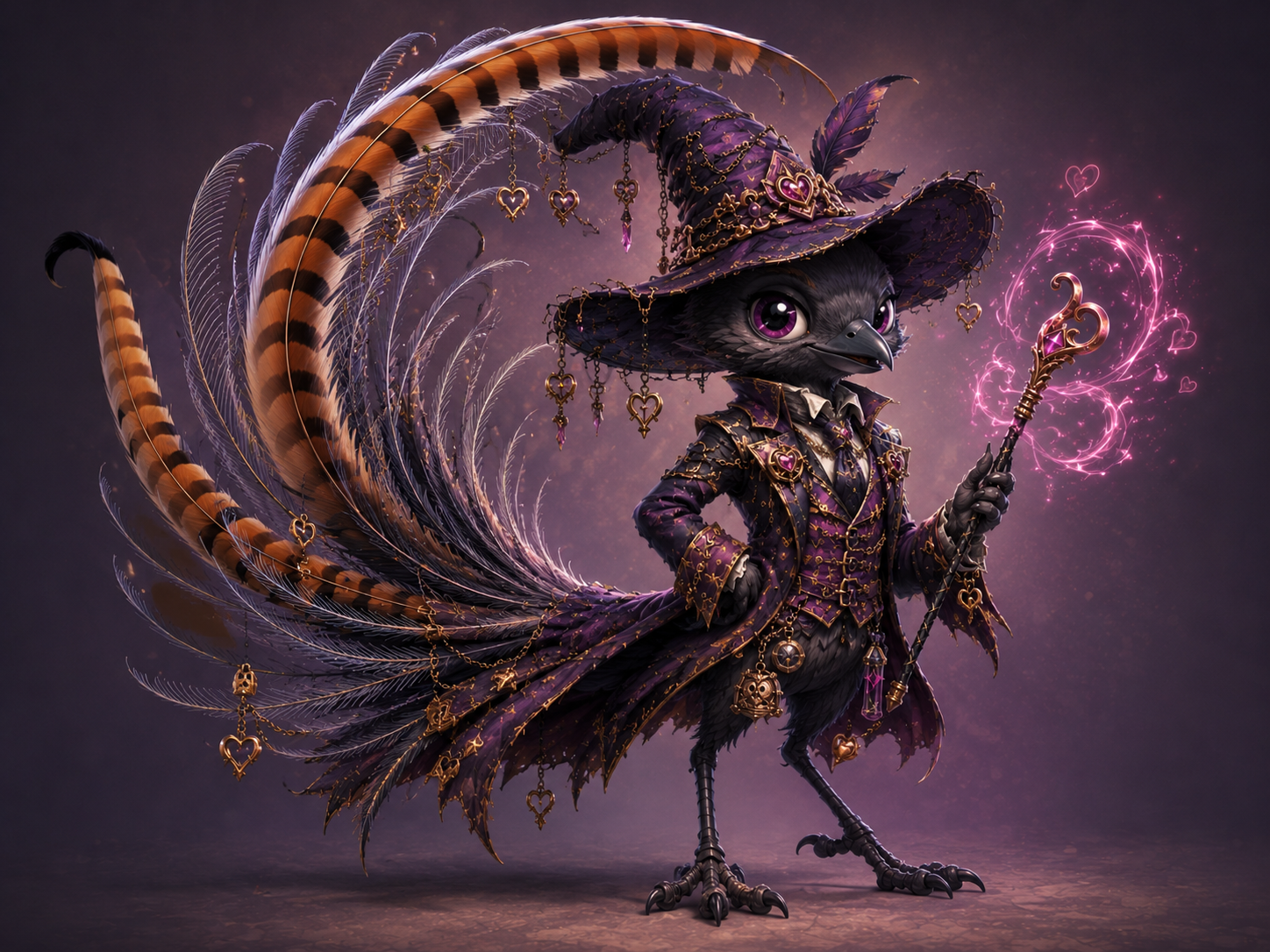
Meet Lari, the Lyrebird Warlock.

Lari looks like a master of impossible arts. He is not. He is barely competent at most things and frequently does not understand the impressive-sounding things he says. What he does have is one frighteningly effective spell: Charm Person. Lari can make confidence feel like evidence, imitation feel like expertise, and a room full of people supply the meaning that his words never contained.

Lari the Lyrebird Warlock in purple and gold, holding a heart-tipped staff beneath an orange-and-black lyrebird tail
One spell. Enormous presentation.He dresses authority like theater and lets everyone else assume there must be substance underneath.
Signature spell · Charm Person

The trick is not knowing. The trick is being believed.

Lari survives by performing certainty. If he is asked to build, teach, repair, investigate, or explain something for real, the illusion starts to wobble. So he redirects. He flatters. He boasts. He repeats the sounds of people who know what they are doing. Then Charm Person nudges everyone nearby to interpret the performance as competence.

Why a lyrebird?

Lyrebirds are extraordinary mimics. That makes Lari's creature design the central joke rather than decoration. He imitates the sounds, posture, vocabulary, and symbols of authority without necessarily understanding what they mean. He does not need to possess expertise if he can reproduce its silhouette convincingly enough.

Why he is dangerous

Charm Person does not make false things true. It changes the social weather around them. People begin filling in Lari's missing logic for him, treating confidence as proof, excusing contradictions, and handing him power because certainty feels easier than judgment. His magic becomes consequential when other people start doing the work of the illusion.

Why the orange tail matters

His enormous orange-and-black lyrebird tail is the visual version of his whole strategy: spectacular, memorable, and almost impossible to ignore. The suit-like tailoring, gold chains, seals, hearts, and official-looking ornaments pile authority onto his silhouette. Look closely, though, and much of it is costume. The grandeur is doing more work than the warlock.

How Heroes fight him

Civweave's answer is deliberately unglamorous: make something real. Learn a skill. Build the working artifact. Show the evidence. Deliver the promised resource. Record who decided what and why. Form relationships sturdy enough to survive a charismatic shortcut. Every externally validated Quest beat is, in the story, another small crack in Lari's spell.

He imitates wisdom. He imitates strength. He imitates authority. He imitates competence.Charm Person makes everyone else mistake the imitation for the real thing.

About the metaphor: Lari is a fictional composite, not a depiction of any real person, politician, party, government, or movement. He represents a recurring pattern: charisma without competence, authority performed as theater, and the temptation to surrender judgment to someone who sounds certain. The joke is that he is mostly bluff. The danger is what can happen when enough people agree to treat the bluff as reality.

The realms

One Quest, five places to move it.

Civweave is organized as a world rather than a pile of menus. Each realm owns a different kind of action, while your Hero identity, Quests, evidence, Party relationships, and Guild network travel with you.

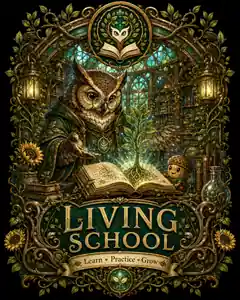
Living School poster art
Learn · Practice · Grow

Living School

Learning that starts with a purpose. Living School builds paths around a goal, mixes explanation with practice, and records demonstrated competence instead of treating attendance as mastery.

  • Personal learning paths and local-first study tools
  • Practice, projects, quizzes, and evidence-backed progress
  • Skills can become qualifications for real Cerbanimo work
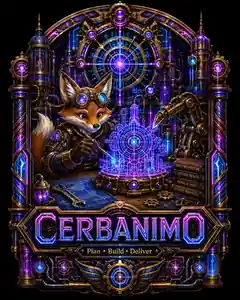
Cerbanimo poster art
Plan · Build · Deliver

Cerbanimo

The work realm. Turn an intention into a Quest, break it into accountable steps, find Heroes with complementary skills, form a Party when it helps, validate results, and share both rewards and credit without burying the work in coordination overhead.

  • Quests, Parties, workboards, proof of contribution, and validation
  • Paid service transactions with a modest platform fee
  • AI and human collaborators can share one documented workflow
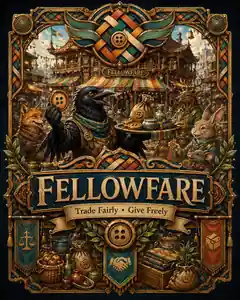
FellowFare poster art
Trade fairly · Give freely

FellowFare

The exchange realm for needs, offers, goods, services, gifts, and direct local trade. FellowFare makes generosity and practical commerce neighbors rather than enemies.

  • Browse needs and offerings across your reachable network
  • Support multiple payment or exchange methods where allowed
  • Keep local discovery useful when connectivity is intermittent
Anarchadia poster art
Propose · Deliberate · Audit

Anarchadia

The civic heart of the wider land of Anarchadia. Communities can draft proposals, gather evidence, run consensus processes, use randomly selected juries, and keep a visible ledger of how decisions were made.

  • Passports, proposals, tribunals, and transparent ledgers
  • Validated civic review can earn community rewards
  • Automation stays answerable to human governance

How value moves

Keep the lights on without owning the people inside.

Civweave separates community membership, compute funding, service commerce, and Guildkeeping so that one payment mechanism does not quietly become a power structure.

Memberships fund capacity

Current launch economics split monthly membership service value after payment processing. Members receive non-expiring compute credits, while the reserve helps fund AI capacity and community resilience.

50% system + compute reserve25% Guildkeeper25% Cerbanimo

Top-ups back actual compute

Compute top-ups are treated as a liability that must be backed until used. Most of the service value stays behind the promised compute.

70% lifetime compute backing25% Guildkeeper5% Cerbanimo

Services reward the worker and the Guild

Cerbanimo service transactions use a 5% facilitation fee. The current design splits that fee evenly between Cerbanimo and the Guildkeeper, while the worker keeps the rest before processor charges and any legally required taxes.

95% worker value before external charges2.5% Guildkeeper2.5% Cerbanimo

Citizen participation is architectural

Guild residency is not the same thing as paid status. A Guild can carry Citizen and Patron residency, local compute, shared capacity, and offline participation as separate layers. Patron activity can expand what a community can sustainably offer without making payment the definition of citizenship.

Economy figures are versioned launch policy and may evolve. Payment processing, taxes, and jurisdiction-specific commerce rules are separate from the percentages shown here.

For Guildkeepers

Run a hearth, not a throne.

A Guildkeeper operates a Guild: a Cloudflare-backed, local, or hybrid community host that keeps data and services available across online and offline conditions. Your Guild is looking for Heroes who need a dependable local community to join.

What a Guildkeeper gets

Guildkeepers can earn a defined share of membership value, compute top-ups, and qualifying service fees associated with their Guild. They also get tools to publish capacity, manage Guild identity, connect payouts, recover accounts, participate in backups, and keep their neighborhood of the network reachable. The infrastructure matters because it gives Heroes somewhere to meet, form Parties, and take on Quests together.

Set up your Guild
Welcome HeroesMake your Guild discoverable, explain what it can support, and help Heroes find a local place to belong without trapping them there.
Keep the hearth availableMaintain the Guild host, monitor capacity, apply safe updates, and preserve a recovery path.
Protect the ledgerPreserve integrity of identity, work evidence, balances, governance records, and signed receipts.
Publish honest capacityAdvertise the seats, compute, services, and physical presence the Guild can actually support.
Respect local-first privacyCollect only what the service needs and avoid turning infrastructure access into surveillance.
Support due processMaintain the venue while Anarchadia provides proposals, juries, audits, and community governance.
Settle money cleanlyConnect payout infrastructure, honor reversals and refunds, and keep compute promises backed.
Work with CharterkeepersWhen a territory uses a Charterkeeper, coordinate Guild chartering, recovery, and federation without handing over local governance.

For press and researchers

The plain-language version.

Civweave deliberately uses fantasy as interface and narrative, but the underlying project is concrete software. Here is the version to quote when you do not want to explain warlocks first.

What is Civweave?

Civweave is an open-source, local-first community operating system built as an installable web app. It combines AI-assisted intention planning, learning, project and labor coordination, local exchange, messaging, mapping, and participatory governance in one interoperable system. Communities connect through Guilds while retaining meaningful offline capability and local control.

People enter as Heroes, intentions become Quests, and Quest-scoped collaborator groups are Parties. Communities form Guilds, each supported by a Guildkeeper. Territories may designate Charterkeepers to help establish new Guilds and maintain regional continuity without governing those Guilds. Rook, the FellowFare exchange guide, carries the separate title Quartermaster.

The product is organized into four specialized realms plus a shared Commons. Living School handles learning, Cerbanimo handles work and collaboration, FellowFare handles exchange, Anarchadia handles governance, and Civweave Commons connects intentions, identity, chat, maps, and navigation across them.

The design goal is simple to state: make it easier for people to turn “I wish this were different” into a sequence of learnable, fundable, shareable, governable actions, and to find others who may want to take that journey with them.

Civweave woven-heart mark

The loom is open.

The source is public because trust should have somewhere to look. Follow the build history, inspect the economics, found a Guild, join one as a Hero, or open Civweave and begin a Quest of your own.